Volkswagen ID.3: The Electric Hatchback That Defines VW’s New EV Direction
The Volkswagen ID.3 is not simply another compact electric hatchback. It is Volkswagen’s clearest statement of how the company believes ordinary drivers should move into electric cars: with familiar proportions, usable interior space, sensible day-to-day performance, and technology intended to fade into the background. That ambition is more important than any individual battery size, screen specification, or acceleration figure.
For American car shoppers, the central fact is also the most important limitation: the Volkswagen ID.3 is not sold in the United States. Volkswagen positioned it primarily for markets where compact hatchbacks remain mainstream choices. Still, dismissing the ID.3 because it is unavailable at a local dealer would be a mistake. It is a valuable lens for understanding Volkswagen’s EV strategy, its strengths, and its continuing weaknesses. The ideas behind the ID.3—dedicated EV packaging, rear-wheel-drive architecture, software-led controls, charging capability, and an effort to lower the barrier to EV ownership—shape the broader Volkswagen electric lineup.
Our view is straightforward: the Volkswagen ID.3 gets the fundamentals of an everyday EV more right than many flashier electric vehicles, but Volkswagen weakened its own case by initially treating software and cabin controls as secondary details. A practical EV cannot succeed on packaging alone. It also has to be easy to operate every morning, simple to charge on a trip, and convincing enough inside that buyers do not feel they traded familiar quality for a digital experiment.
A Better Starting Point Than an Electric Conversion
The ID.3 was designed around Volkswagen’s dedicated electric-vehicle platform rather than adapted from a gasoline-car architecture. That decision matters. A battery pack mounted low in the floor helps create a low center of gravity, while the lack of a conventional engine and transmission tunnel allows a more open cabin layout. The ID.3’s exterior footprint is compact, yet its interior packaging is intended to feel more generous than shoppers may expect from a hatchback.
This is the correct approach for a mass-market EV. Too many electric vehicles ask buyers to accept one of two bad compromises: a conventional vehicle that carries its battery awkwardly, or a radically styled product that makes simple tasks unnecessarily complicated. The ID.3 instead starts with a sensible premise. Most drivers do not need an electric car to look like a spaceship. They need it to fit into parking spaces, carry passengers and groceries, ride comfortably, and reduce the inconvenience of replacing a gasoline vehicle.
The rear-wheel-drive layout is another meaningful distinction. It helps preserve front-wheel space and gives the ID.3 a different driving character from the front-wheel-drive compact hatchbacks that traditionally define Volkswagen in many markets. Rear-drive does not automatically make a car sporty, nor should that be the main selling point. Its greater value here is technical efficiency and packaging. Volkswagen used the platform to make an EV that feels purpose-built rather than improvised.

For U.S. buyers comparing Volkswagen EVs, this is a lesson worth carrying over to larger models such as the ID.4. Vehicle size changes, but the underlying question is the same: does the EV architecture create useful space and calm, or does it merely add batteries to a vehicle concept designed for another powertrain?
The ID.3 makes the case that purpose-built design is the better long-term answer.
The ID.3 Understands That Efficiency Is More Useful Than Drama
Electric-car marketing often focuses on peak power and rapid acceleration, as if every buyer needs a vehicle capable of sports-car launches. That is a weak definition of EV value. For a compact hatchback, the more important measures are energy use, predictable range, easy charging, and a driving experience that does not become tiring in urban traffic or on longer highway trips.
The Volkswagen ID.3 is strongest when viewed through that practical standard. It was conceived as a daily driver, not a technology demonstration. Different versions have been offered with different battery capacities and power outputs, so shoppers should not rely on a single range or charging number when comparing listings or international reviews. Climate, wheel size, speed, terrain, and battery condition all affect real-world results. The useful takeaway is that the ID.3’s design aims to make available energy go farther without resorting to the bulk and weight of a large electric SUV.
That matters because battery size is not a free upgrade. Larger packs can increase purchase cost, vehicle mass, and the resources required to build the car. Bigger batteries can be appropriate for buyers with frequent long-distance needs, but the assumption that every EV should carry the largest possible battery is lazy advice. A well-packaged compact EV with reasonable consumption and dependable public charging can be a smarter ownership proposition than a heavier vehicle carrying excess capacity that goes largely unused.
The counterargument is legitimate: Americans often drive farther, have more highway miles, and may face less reliable public charging than drivers in dense European markets. That is precisely why the ID.3 should be treated as a strategic reference rather than an automatic recommendation for every U.S. household. An electric hatchback works best when home or workplace charging is available and daily travel fits comfortably within its real-world range. It is not a universal substitute for a long-range family crossover, a tow vehicle, or a one-car household that regularly makes demanding road trips.
But the answer to those needs is not to declare compact EVs irrelevant. It is to match the vehicle to the job. For commuters, urban households, and drivers who value lower energy use and easy maneuverability, the ID.3 formula remains more rational than the industry’s rush toward oversized electric crossovers.
Practicality Is the ID.3’s Real Selling Point
Volkswagen has long understood that a compact car earns loyalty through everyday usefulness. The ID.3 carries that philosophy into an electric format. Its hatchback body is inherently practical: the rear opening makes it easier to load bulky items than a conventional sedan trunk, while the compact length is more manageable in tight parking situations than a midsize SUV.
The battery-in-floor layout also helps the cabin avoid the cramped feeling common in small internal-combustion cars. The absence of a large engine up front and a transmission tunnel through the middle allows designers to rethink storage and occupant space. This is where a dedicated EV can quietly outperform a vehicle with more aggressive styling or more horsepower. Space that is useful every day is worth more than a headline-grabbing performance figure used a few times a year.

That does not mean the ID.3 is a substitute for every type of vehicle. Its hatchback format has clear limits. Families that routinely carry large strollers, sports equipment, multiple pets, or a full load of luggage may be better served by a larger vehicle. American buyers accustomed to the cargo volume of compact SUVs may also find a hatchback less flexible than expected. The point is not that the ID.3 is universally spacious;
it is that it makes unusually effective use of a compact footprint.
Volkswagen’s strategic challenge is that this kind of efficiency is harder to sell in a market trained to equate size with value. Yet an EV’s added weight and cost make right-sizing more important, not less. The ID.3 is compelling because it refuses to pretend that every driver needs a large vehicle.
Volkswagen’s Software Missteps Cannot Be Excused
The original ID.3 story also contains a warning. Volkswagen’s early electric-era software problems became a distraction from a fundamentally sound vehicle concept. Infotainment responsiveness, interface design, and the broader perception of unfinished digital systems mattered because the company had positioned the ID.3 as the beginning of a new technological era.
That made weak execution especially damaging. Buyers will forgive a compact car for having modest materials in some areas if the price and function make sense. They are less likely to forgive essential controls that are confusing, slow, or awkward to use. A car is not a smartphone. Drivers cannot simply ignore a flawed interface when they need to adjust climate settings, select navigation, manage charging, or operate a basic vehicle function while moving.
Volkswagen’s reliance on touch-based controls and minimal physical switchgear became one of the clearest examples of an industry trend that should be challenged. Removing buttons is often presented as modern design, but it can be worse ergonomics disguised as innovation. Simple, frequently used functions deserve intuitive physical controls or an exceptionally well-executed alternative. A clean-looking dashboard is not automatically a better dashboard.
Updates and later revisions can improve software and interface behavior, and Volkswagen has shown that it understands some of the criticism. Even so, the larger lesson remains: buyers should evaluate the actual system in the vehicle they are considering, not accept vague assurances that future updates will solve present frustrations. Test the screen. Try the navigation. Change the temperature. Connect a phone. Explore charging settings. These are not minor details in an EV; they are part of the ownership experience.
Interior Quality Requires a More Honest Conversation
Volkswagen buyers often arrive with expectations shaped by the Golf, Jetta, Tiguan, and other familiar products: restrained design, solid assembly, and materials that feel appropriate for the price. The ID.3’s cabin challenged some of those expectations. Its minimalist layout and use of harder plastics in certain areas have drawn criticism, particularly from shoppers who associate the Volkswagen badge with a more substantial interior feel.
That criticism is fair, but it needs context. Electric vehicles face intense cost pressure from batteries, electronics, and new development expenses. A compact EV cannot offer premium materials everywhere without becoming too expensive for the buyers it is meant to reach. The real question is not whether every surface is soft-touch. It is whether the cabin feels durable, well assembled, thoughtfully designed, and appropriate for the vehicle’s market position.

Volkswagen should not hide behind the cost argument, however. If the ID.3 is intended to be a mainstream electric alternative, its interior must inspire confidence over years of use. Cost discipline is sensible;
a feeling of cheapness is not. This is where the brand’s traditional strengths need to reassert themselves. The most successful affordable EVs will not merely be the least expensive. They will make owners feel that the compromises were intelligently chosen.
Charging Matters More Than the Brochure Claim
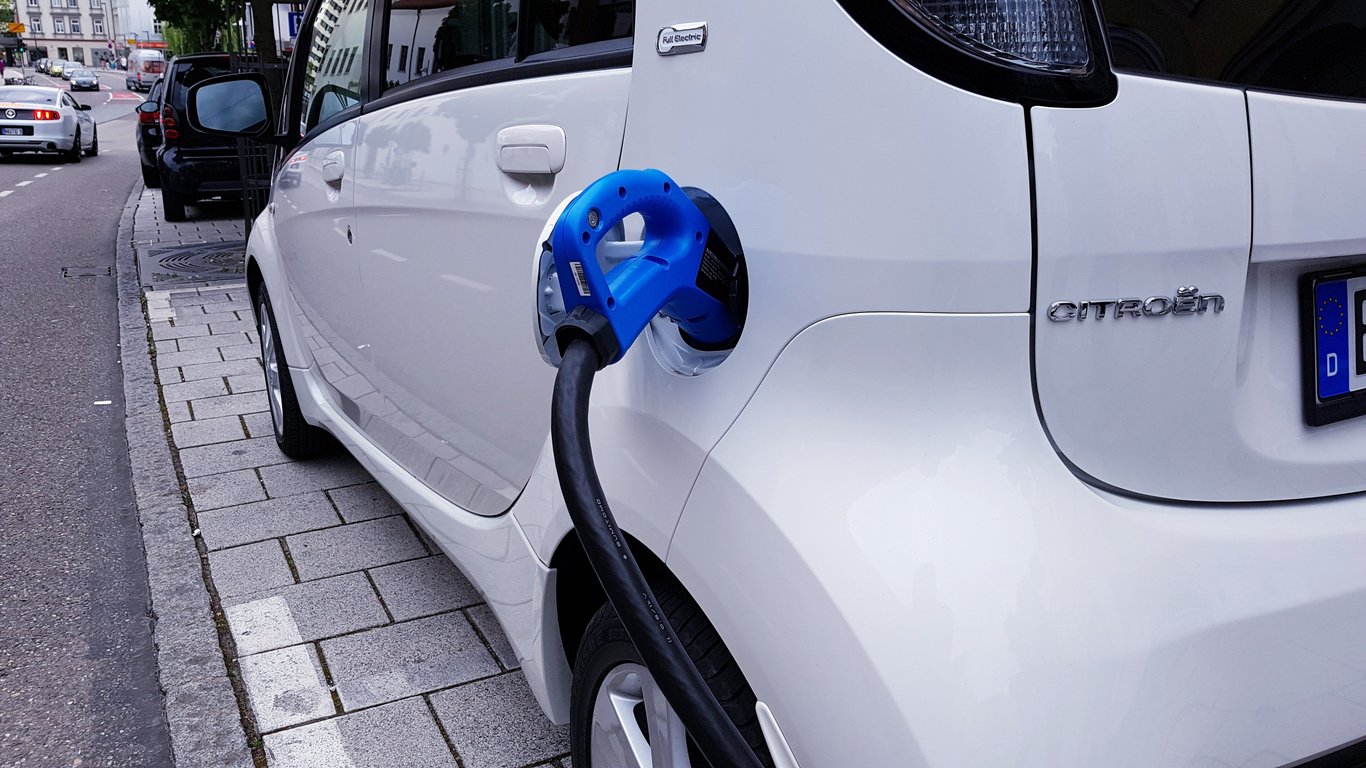
Electric-car buyers should treat charging capability as a complete ownership system, not a single maximum charging-rate figure. The ID.3 supports the basic charging patterns expected of a modern EV: slower AC charging for regular home or destination use and faster DC charging for road trips. But the ownership outcome depends on much more than what the vehicle can accept at an ideal charger.
Drivers need dependable access to a place where the vehicle can sit and charge regularly. For many owners, home charging is the feature that transforms EV ownership from a compromise into a convenience. Starting the day with a replenished battery reduces reliance on public stations and makes range anxiety much less relevant. Apartment residents, renters, and households without dedicated parking need to investigate their charging options before choosing any EV, including one based on the ID.3’s practical philosophy.
On longer trips, charging speed matters, but charging reliability, route planning, station availability, payment simplicity, and battery conditioning matter too. A vehicle that charges quickly on paper but sends a driver into unreliable charging locations is not delivering a premium experience. Volkswagen’s EV future will be judged as much by the surrounding charging and software experience as by the vehicles themselves.
The sensible advice is to plan from your real routine backward. Review daily mileage, overnight parking, workplace access, weekend travel, and the routes you actually drive. Do not buy based solely on an optimistic range figure, and do not reject an EV because of a worst-case road-trip scenario that happens once a year. The ID.3’s central idea works best when charging is integrated into normal life rather than treated like a weekly trip to a fuel station.
Why the ID.3 Still Matters to American Shoppers
The United States may not receive the Volkswagen ID.3, but its importance is not confined to the markets where it is sold. It reveals what Volkswagen considers essential to its electric future: a dedicated platform, modular battery options, a more open cabin, digital vehicle functions, and a focus on making EVs feel normal enough for mainstream adoption.
It also reveals the danger of assuming that a respected legacy automaker automatically understands the digital side of electric vehicles. Volkswagen knows how to engineer practical cars. The ID.3 shows that it can also create a fundamentally sensible electric package. Yet the model demonstrates that software quality, controls, and ownership support can undermine excellent hardware if they are not treated as core product attributes.
For U.S. shoppers considering a Volkswagen EV, the best lesson is not to wait for an ID.3 import or to assume every ID-badged model will deliver the same experience. Instead, use the ID.3 as a checklist. Is the vehicle sized appropriately for your real needs?
Does its EV platform create meaningful interior or cargo advantages? Are the controls easy to use without distraction? Does the charging setup fit your home and travel habits? Are you paying for useful battery capacity, or simply for a larger number?
Final Verdict: A Strong EV Blueprint, Not a Finished Answer
The Volkswagen ID.3 deserves credit for pursuing the right kind of electric car. It is compact without being purely compromised, practical without being dull, and purpose-built without relying on theatrical design. Its basic formula is arguably more relevant to sustainable mass-market electrification than another high-powered, heavy electric SUV.
But Volkswagen should be held to a higher standard than good intentions. The ID.3’s software history and questionable control choices show that an EV cannot win on architecture and efficiency alone. Everyday usability is part of engineering quality. Drivers need an interface that works naturally, a cabin that feels durable, and a charging experience that is straightforward when conditions are less than ideal.
That is why the Volkswagen ID.3 matters. It is Volkswagen’s most revealing electric vehicle: a smart, practical blueprint that identifies the path forward while exposing the work still required. If Volkswagen combines the ID.3’s packaging discipline with genuinely polished software, intuitive physical usability, and competitive ownership support, its electric future will be much stronger. If it does not, better-designed rivals will continue to turn the company’s sensible EV ideas into someone else’s sales.